Elementary Educator Resources
— Grades 1–5
Elementary Educator Resources
Build Strong Foundations. Keep Curiosity Growing.
Elementary students are developing the academic foundations they will carry into later learning while also becoming more independent thinkers, readers, problem solvers, creators, and members of their classroom communities.
This space is designed to support educators working with students in Grades 1–5 with practical ideas, adaptable classroom resources, subject-based materials, and tools that can complement the work you are already doing.
The goal is not to add more to your workload. It is to give you useful places to turn when you need an activity, a printable, a project idea, a planning tool, or another way to help a student understand something.
Explore by Subject
📚 Reading & Literacy
Support reading fluency, comprehension, vocabulary, spelling, grammar, sentence and paragraph development, creative writing, informational reading, and growing confidence with language.
🔢 Math
Support number sense, operations, place value, fractions, decimals, measurement, geometry, data, word problems, mathematical reasoning, and practical problem solving.
🌿 Science & Nature
Encourage questioning, observation, experimentation, and discovery through life science, Earth science, weather, ecosystems, matter, energy, forces, the human body, and the natural world.
🎨 Art & Creativity
Support imagination and expression through drawing, painting, music, theater, storytelling, design, sculpture, photography, crafts, creative writing, and art from different cultures and periods.
🌍 History, Culture & Geography
Help students explore communities, maps, world regions, history, government basics, cultures, migration, Indigenous histories, timelines, primary sources, and the connections between people and place.
🏠 Life Skills
Help students strengthen organization, responsibility, communication, teamwork, money basics, safety, decision making, routines, self-advocacy, and practical everyday independence.
Learning Beyond the Lesson
Give Learning Somewhere to Go
Elementary students often understand ideas more deeply when they have opportunities to use what they are learning instead of only answering questions about it.
Projects, experiments, puzzles, writing, discussion, observation, and real-world connections can help students practice academic skills while developing curiosity, confidence, creativity, and independence.
🧩 Games & Puzzles
Use logic games, brain teasers, sorting activities, word challenges, math puzzles, and collaborative problems to strengthen reasoning, persistence, and flexible thinking.
🧪 Try an Experiment
Give students opportunities to make predictions, test ideas, observe results, record what happens, and talk about why an outcome may have occurred.
🔎 Explore Your World
Turn classrooms, homes, neighborhoods, nature, maps, museums, libraries, current events, family stories, and everyday questions into opportunities for investigation and discovery.
✍️ Write & Create
Use journaling, storytelling, comics, poetry, illustration, design, presentations, and creative projects to give students different ways to communicate what they know and imagine something new.
📖 Story Corner
Stories Build Readers — and Much More
Stories can strengthen vocabulary, comprehension, imagination, empathy, background knowledge, discussion skills, and a lifelong relationship with reading.
Use Story Corner to discover books and reading experiences that can support read-alouds, independent reading, classroom discussions, writing activities, creative projects, and connections across different subjects.
Not every book needs a worksheet attached to it. Sometimes giving students time to read, wonder, laugh, question, or disappear into a story is enough.
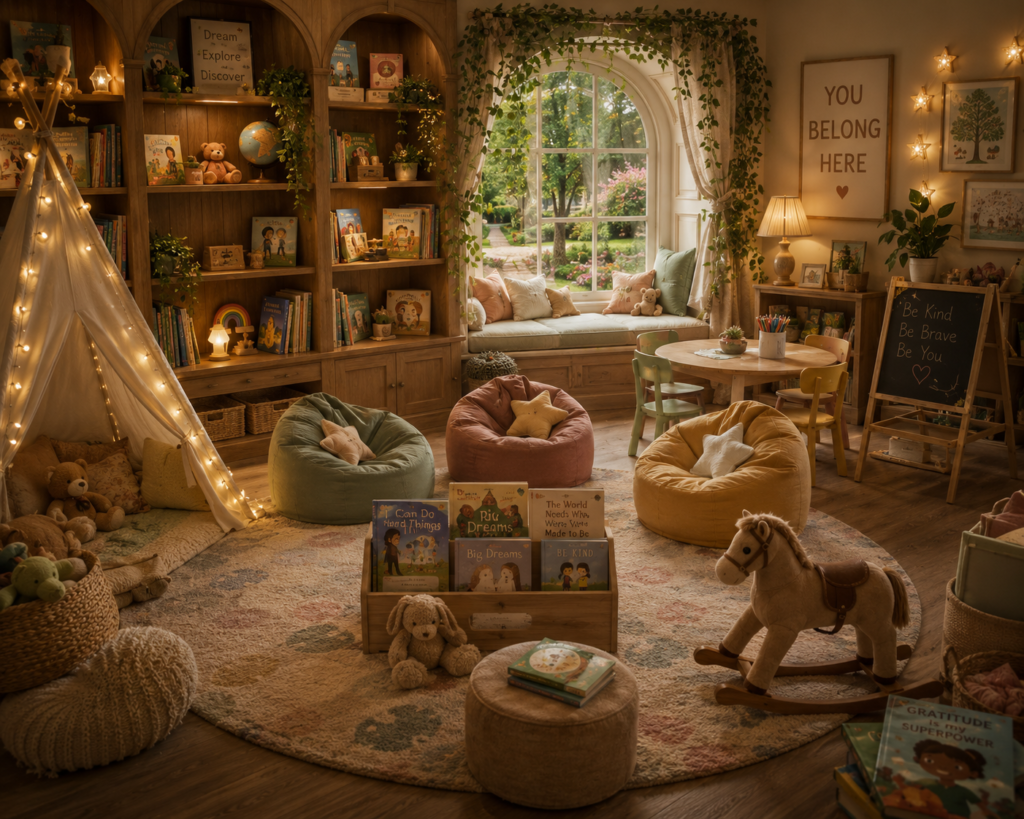
Step into the SNO Children’s Library
Growing as a Learner
Strong Students Need More Than Academic Skills
Elementary students are learning how to manage materials, communicate ideas, ask questions, work with others, solve problems, recover from mistakes, and gradually take more responsibility for their own learning.
These skills develop over time and often need to be taught as intentionally as academic content.
🌱 Confidence
Create opportunities for students to try before asking for help, recognize progress, take appropriate risks, and understand that struggling with something does not mean they cannot learn it.
🤝 Cooperation
Support listening, sharing ideas, taking turns, resolving small disagreements, contributing to group work, respecting differences, and recognizing the value each student brings to a classroom community.
🗣️ Communication
Encourage students to ask questions, explain their thinking, listen carefully, express needs respectfully, participate in discussions, and communicate ideas in different ways.
🧠 Problem Solving
Give students opportunities to identify problems, consider possible solutions, test strategies, learn from mistakes, and try another approach when the first one does not work.
✨ Curiosity
Make room for questions that are not on the worksheet. Encourage students to investigate things they notice, follow interests, make connections, and discover that learning can begin with simply wondering why.
🧺 Independence & Organization
Help students gradually manage supplies, assignments, schedules, classroom responsibilities, projects, routines, and personal goals while still knowing when and how to ask for support.
Connect With Families
Learning Continues Beyond the Classroom
Families do not need to become substitute teachers to support learning at home.
Reading together, cooking, asking questions, playing games, exploring outdoors, talking about the day, visiting community spaces, sharing family stories, managing small responsibilities, and allowing children to participate in everyday life can reinforce many of the same skills students are developing at school.
Use Dendera’s Family Resources when you want to share approachable tools, ideas, and activities that families can use without turning home into another classroom.