Early Learner Educator Resources
— Pre-K & Kindergarten
Early Learner Educator Resources
Teach Through Curiosity, Play & Connection
Early learning happens through movement, conversation, exploration, repetition, imagination, and play.
This space is designed to support educators working with Pre-K and Kindergarten learners with practical ideas, adaptable classroom tools, subject-based resources, and materials that can complement the work you are already doing.
The goal is not to add more to your plate. It is to give you useful places to turn when you need an activity, a printable, a planning tool, or another way to help a young learner understand something.
Explore by Subject
📚 Reading & Literacy
Support letters, sounds, early phonics, vocabulary, listening, storytelling, handwriting readiness, and joyful early reading experiences.
🔢 Math
Explore playful ways to teach counting, number recognition, patterns, sorting, shapes, measurement, comparison, and early mathematical thinking.
🌿 Science & Nature
Encourage observation, questioning, experimentation, and discovery through plants, animals, weather, seasons, the senses, motion, water, light, and nature.
🎨 Art & Creativity
Support imagination and expression through color, drawing, painting, music, movement, storytelling, building, crafts, and creative play.
🌍 History, Culture & Geography
Introduce family, community, neighborhoods, maps, traditions, places, cultures, community helpers, and simple ideas about past and present.
🏠 Life Skills
Build routines, communication, safety, independence, responsibility, cooperation, healthy habits, and practical everyday skills.
Learn Through Play
Play Is Part of the Learning
For young children, play is one of the main ways they explore ideas, practice skills, solve problems, communicate, create, and make sense of the world around them.
These activities can support academic learning while also building confidence, cooperation, language, movement, and independence.
🧩 Games & Matching
Use simple games, puzzles, sorting, matching, memory activities, and hands-on challenges to reinforce letters, numbers, vocabulary, patterns, focus, and problem solving.
🎭 Build, Create & Pretend
Blocks, art materials, puppets, dress-up, dramatic play, and open-ended materials give children opportunities to experiment, tell stories, solve problems, and express ideas in their own way.
🔎 Observe & Explore
Nature walks, sensory activities, classroom investigations, weather watching, simple experiments, and object exploration help children notice details, make predictions, ask questions, and describe what they discover.
🎵 Songs, Rhymes & Movement
Use music, rhythm, rhyme, dance, finger plays, and movement to support language, memory, coordination, routines, counting, patterns, and classroom transitions.
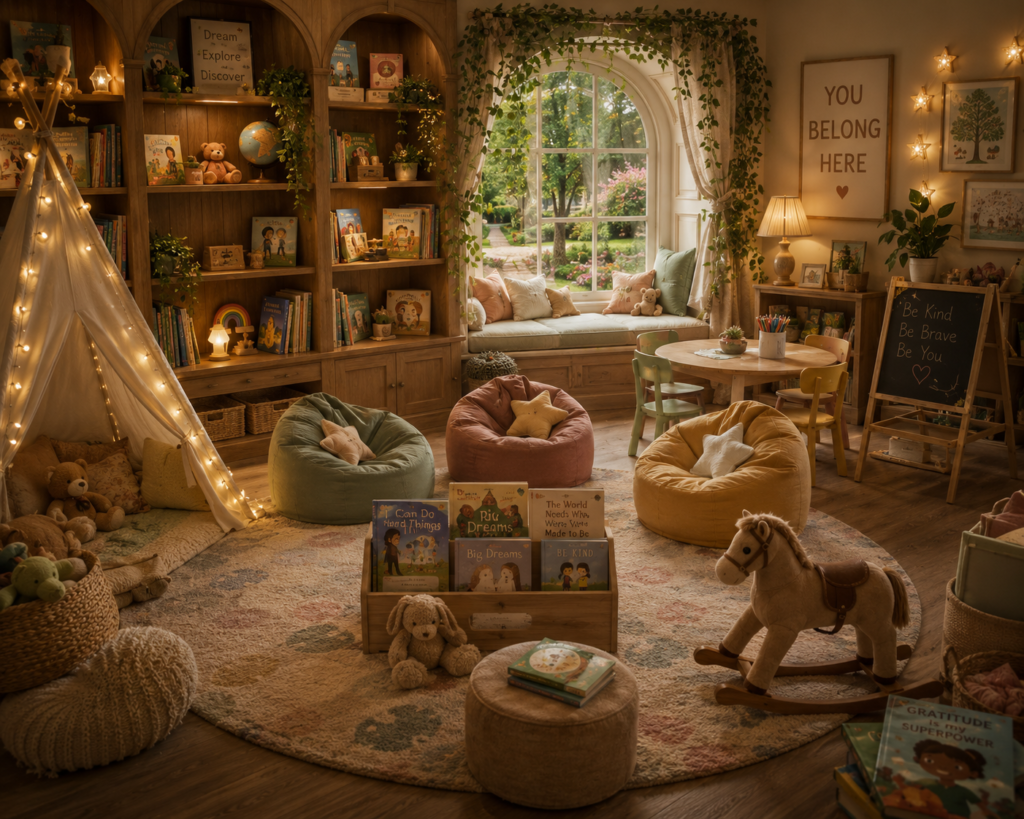
📖 Story Corner
Stories Open More Than Books
Stories help young learners build language, imagination, comprehension, empathy, memory, and connection.
Use Story Corner to discover books and reading experiences that can support read-aloud time, classroom discussions, literacy activities, creative projects, and quiet moments throughout the day.
The goal is not to turn every story into an assignment. Sometimes reading together is enough.
Step into the SNO Children’s Library
Growing Skills
Small Skills Grow Into Big Confidence
Early learners are building much more than academic skills. They are also learning how to communicate, solve problems, try new things, work with others, and become more independent.
This section gives educators practical ways to support the everyday skills that help children feel capable in the classroom and beyond.
🌱 Confidence
Create opportunities for children to try, make choices, solve simple problems, and recognize their own progress without expecting perfection.
🤝 Kindness
Support sharing, turn-taking, empathy, teamwork, respect, and the skills children need to participate in a classroom community.
🗣️ Communication
Encourage speaking, listening, asking questions, expressing needs, telling stories, and learning how to communicate with both adults and peers.
🧠 Problem Solving
Give children chances to make decisions, test ideas, notice patterns, work through small challenges, and try another approach when something does not work.
✨ Curiosity
Protect the instinct to wonder. Use questions, observation, exploration, stories, and hands-on activities to help children notice more and ask why.
🧺 Independence
Build age-appropriate independence through routines, classroom jobs, organizing belongings, making simple choices, completing small tasks, and knowing when to ask for help.
Connect With Families
Learning Continues Beyond the Classroom
Families do not need to recreate school at home to support what children are learning.
Simple routines, conversations, stories, games, cooking, outdoor exploration, chores, art, and everyday experiences can reinforce many of the same skills children are developing in the classroom.
Use Dendera’s Family Resources when you want to share approachable ideas, tools, and activities that families can use at home without adding unnecessary pressure.